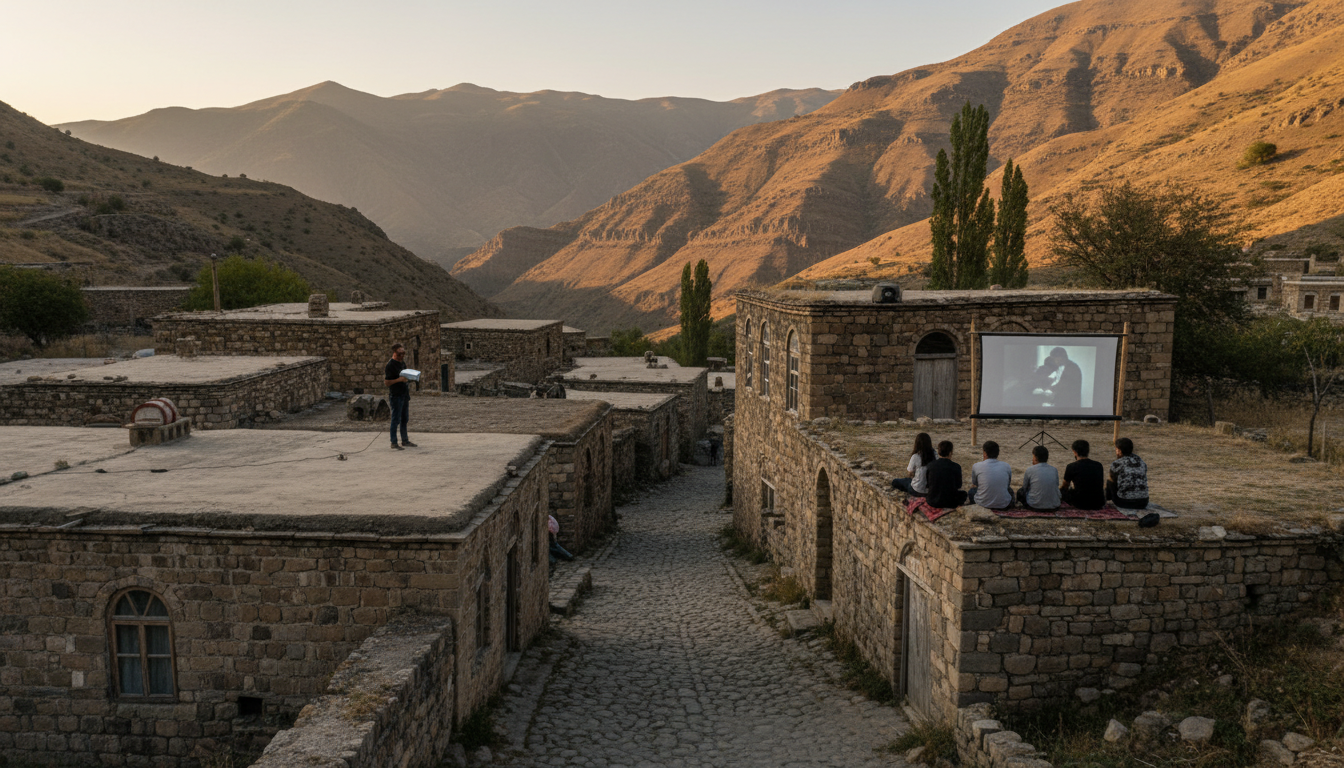
Modest in scale but radical in their very existence, a nascent wave of queer films in Azerbaijan is documenting lives long erased from public consciousness. These cinematic efforts are not merely artistic expressions; they represent a profound act of resistance in a country where violations of LGBTQI+ rights, discrimination, and hate crimes are frequently reported. We see in them the quiet forging of a new historical record.
Azerbaijan has consistently ranked among the lowest on ILGA-Europe’s Rainbow Map, a testament to systemic marginalisation that extends deeply into the arts. State officials’ increasing hate speech only compounds this hostile environment, ensuring that queer individuals remain largely invisible, particularly in mainstream cultural narratives and cinema.
Yet, from this challenging landscape, a new wave of short films has emerged, addressing these issues head-on. Through intimate, personal storytelling, these works offer rare portrayals of queer life, bravely beginning to write the first chapters of queer cinematic history in Azerbaijan itself. This is a vital and unprecedented development.
One of the first such documented stories emerged from a grim period in 2017, when Azerbaijan joined a list of countries, including Chechnya and Egypt, facing violent crackdowns on LGBTQI+ individuals. Authorities orchestrated mass arrests, torture, and fabricated charges against queer citizens, a crisis that quickly slipped into silence as global attention faded.
The film “All Monsters Are Human,” by British filmmakers Hugh Davies and Helen Spooner, bravely surfaced from that silence. It documents the lives of three queer Azerbaijanis — Roma, Lady Cat, and Lisa — whose journeys often lead them between Baku and Istanbul, a common migration route for trans women seeking safety.
Through a hybrid form, combining raw interviews with animation, the film gives visual shape to traumas difficult to articulate. Animated segments soften unbearable memories, creating a space where pain is perceivable but never voyeuristic. This sensitive approach resists sensationalism, even from foreign directors.
Crucially, the film’s Western gaze does not objectify its subjects; rather, it amplifies their agency and dignity in the face of systemic violence. We hear Roma recount surviving sexual assault and police brutality, and see Lady Cat navigating sex work, a form of both survival and erasure.
Perhaps most movingly, the film reconstructs the memory of Kristina, a trans woman killed in Istanbul, through her mother’s recollections. The filmmakers travelled to Azerbaijan to speak with her, revealing the unbearable contradiction between maternal tenderness and social cruelty. Kristina, once chained by her father, is lovingly remembered by her mother as someone who would always share her last piece of bread.
This new wave stands in stark contrast to previous cinematic representations. The first homosexual character in Azerbaijani cinema, in the 2014 comedy “My Name is Intigam,” appeared only as caricature, an instrument of irony or ridicule. For decades, mainstream film reinforced heteronormative ideology by relegating queer figures to punchlines, denying them full human subjectivity.
Even today, no mainstream Azerbaijani films positively portray LGBTQI+ lives, and international queer cinema remains largely absent from local screens. Yet, an anxiety about the “spread” of queer themes has already reached the film community, framed often as a threat to national identity and traditional values.
“There has been overt propaganda of homosexuality and sexual minorities in world cinema in recent years,” stated respected director Ayaz Salayev, expressing concern that if Azerbaijani cinema follows this “Western path,” it could deal a “big blow to national cinema.” Such sentiments underscore a broader cultural and geopolitical resistance to perceived external influences.
Despite this hostility and the deep-seated societal marginalisation, these modest films are undeniably radical. They are not merely telling stories; they are reclaiming narratives, asserting presence, and building a foundation for future visibility. For a community long erased, these cinematic voices are not simply films, but essential acts of survival, witness, and ultimately, self-reclamation.