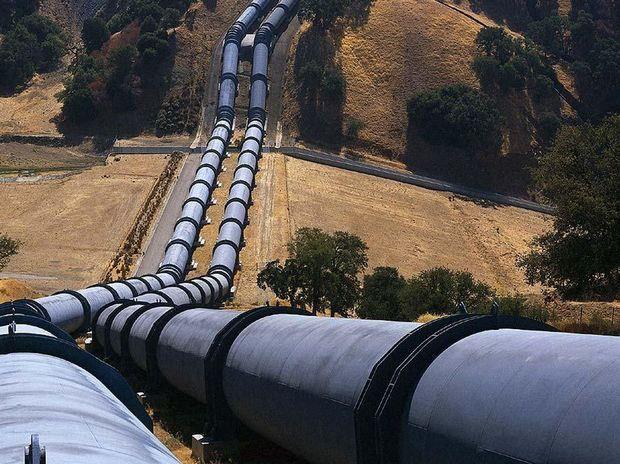
Georgia, Azerbaijan and Kazakhstan are quietly reshaping their shared oil export infrastructure. On 18 May, during Georgian Prime Minister Irakli Kobakhidze’s visit to Baku, an agreement was signed to resume oil transportation via the Baku–Supsa pipeline — a 830-kilometre route that runs from the Azeri–Chirag–Gunashli oil field in the Caspian to the Georgian Black Sea port of Supsa. The pipeline had been largely dormant for years. Under the new agreement, a guaranteed minimum throughput level was agreed between Georgia’s Oil and Gas Corporation, SOCAR Midstream Operations and SOCAR.
The day after the agreement, on 19 May, Kobakhidze announced plans to extend the pipeline’s use to include Kazakh oil — a statement that was quickly picked up in Astana. Kazakhstan exported 78.7 million tonnes of oil in 2025, of which 64.8 million tonnes moved via the Caspian Pipeline Consortium system through Russian territory. The CPC route has been a persistent point of vulnerability: Russia has used maintenance incidents and technical disputes to periodically restrict flows, most recently suspending Kazakh oil transit via the Druzhba pipeline to Germany in May 2026 over the Ukraine issue.
“The restoration of the Baku–Supsa pipeline, including through the possible transportation of Kazakh petroleum products, would allow Georgia to generate tens of millions of lari in annual revenue.”
— Georgian Prime Minister Irakli Kobakhidze, 19 May 2026
The map is changing
The Baku–Supsa restoration is part of a broader pattern of infrastructure reorientation that has accelerated since 2022. Kazakhstan has been systematically expanding its non-Russian export options: the BTC pipeline (Baku–Tbilisi–Ceyhan) already carries Kazakh oil, and the port of Aktau on the Caspian — being expanded with EBRD financing — is the transfer point. Baku–Supsa adds a second Black Sea outlet, shorter and more flexible for certain cargo types.
For Georgia, the pipeline revival is economically significant and politically useful. Tbilisi has been navigating a difficult position: its EU integration process is frozen, relations with the United States are strained, but its geographic indispensability as a transit country — for oil, gas and Middle Corridor freight — gives it leverage that pure diplomatic isolation cannot eliminate. Kobakhidze’s Baku visit produced a concrete deliverable that neither Brussels nor Washington can easily dismiss.
The three routes Kazakhstan now uses to export oil westward
· CPC (Caspian Pipeline Consortium): 64.8 million tonnes in 2025 — dominant but Russia-controlled, subject to political interruptions
· BTC (Baku–Tbilisi–Ceyhan): Caspian tanker to Baku, then pipeline to Turkish Mediterranean coast — expanding
· Baku–Supsa: Caspian tanker to Baku, then pipeline to Georgian Black Sea — dormant since ~2020, now being restored
Russia’s decision to suspend Kazakh oil transit via Druzhba in May — citing political disagreements over Ukraine — is the immediate context for Astana’s interest in Baku–Supsa. Each additional export route reduces the leverage Russia can exercise through infrastructure disruption. The current diversification push is not new in direction, but it has new urgency.