The prevailing instability surrounding access to the Strait of Hormuz, stemming from persistent tensions between the United States and Iran, is compelling a significant re-evaluation of Eurasian trade routes. This environment of heightened maritime risk directly propels the development and utilisation of overland alternatives for international logistics.
The Strait, a vital choke point for global energy and commerce, faces intermittent threats to its navigability, despite ongoing diplomatic efforts to secure its stability. Such vulnerabilities necessitate robust contingency planning for supply chains extending across the broader Eurasian landmass.
Consequently, a discernible shift in global logistics strategies is underway, with businesses and states prioritising the de-risking of trade flows. Reducing reliance on single, potentially volatile maritime corridors has become an imperative, driving investment into diversified transport options.
This strategic recalibration extends beyond immediate commercial considerations, reflecting a broader geopolitical imperative to enhance supply chain resilience. States are increasingly concerned with avoiding disruptions caused by regional conflicts or unilateral actions affecting critical global arteries.
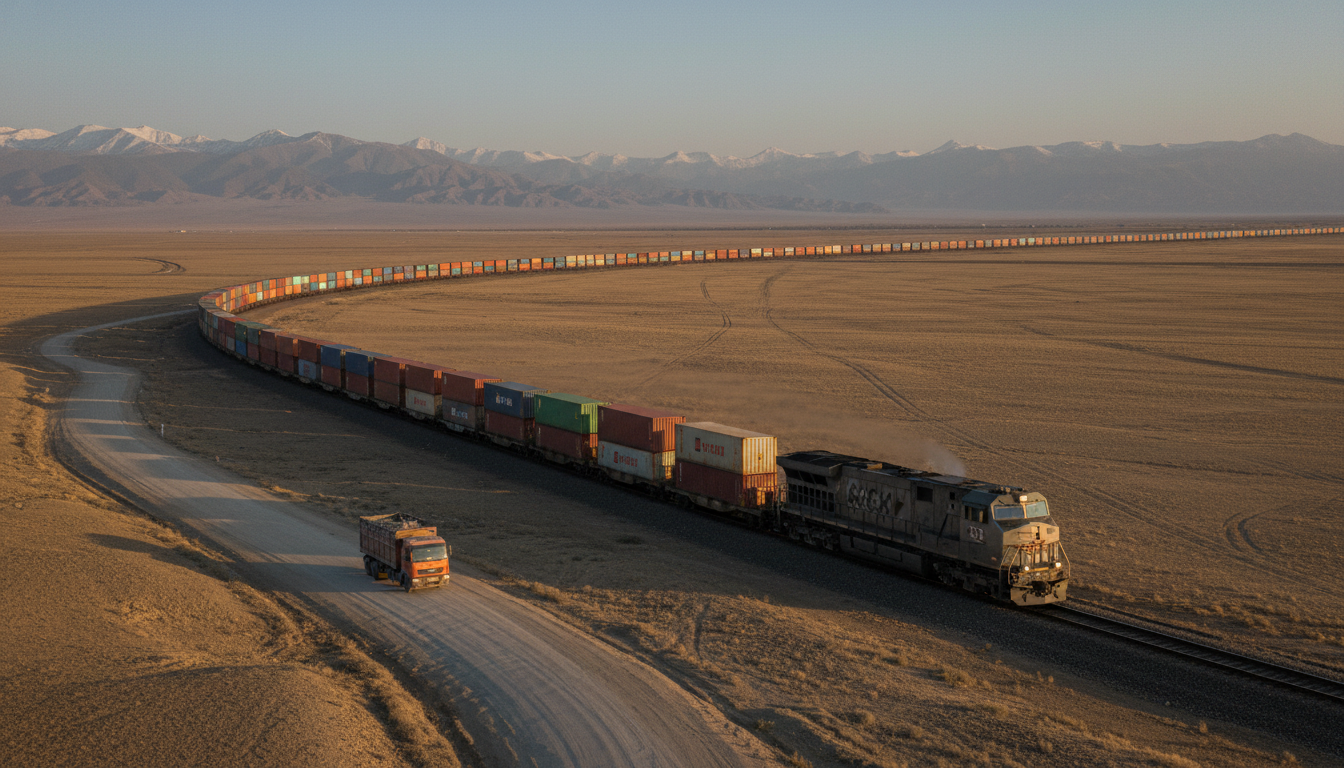
Within this evolving landscape, the Trans-Caspian International Transport Route, commonly known as the Middle Corridor, has gained unprecedented prominence. This multimodal route traverses Kazakhstan, crosses the Caspian Sea, then continues through Azerbaijan and Georgia to reach Turkey and the Black Sea.
The corridor offers a crucial overland alternative, connecting East Asia to Europe, bypassing traditional northern routes and the Suez Canal, in addition to Hormuz. Its strategic location positions it as a cornerstone for future Eurasian connectivity, reducing transit times compared to purely maritime routes.
States along its path, particularly Kazakhstan, Azerbaijan, and Georgia, are actively investing in enhancing infrastructure capacity, including port facilities, rail networks, and logistics hubs. These coordinated efforts aim to streamline customs procedures and harmonise operational standards across multiple jurisdictions.
While the Middle Corridor offers compelling advantages, it also presents inherent challenges, including the necessity of multiple border crossings and diverse regulatory frameworks. Effective coordination among participating countries remains essential for realising its full potential as a high-volume trade artery.
The current focus on the Middle Corridor represents more than just a temporary response to maritime insecurity; it reflects a long-term strategic pivot in Eurasian logistics. Investment decisions are now guided by an understanding of persistent geopolitical risks to conventional shipping lanes.
For the Central Asian and South Caucasus states, this development represents a significant opportunity to bolster their regional integration and increase their geopolitical relevance. Enhanced transit capabilities translate into direct economic benefits and strengthened international partnerships.
This acceleration in the Middle Corridor's development underscores a broader regional ambition for greater strategic autonomy in trade and transport infrastructure. It allows states to diversify their economic partners and reduce dependence on established, potentially less predictable, routes.
Even if diplomatic breakthroughs stabilise the Strait of Hormuz, the operational advancements and infrastructure investments made along the Middle Corridor are likely to ensure its sustained importance. The established precedent of diversification will continue to shape future trade decisions.
Ultimately, the recent geopolitical pressures have not merely boosted an existing route but have fundamentally supercharged its emergence as a central pillar of Eurasian trade. It signifies a lasting shift in how global supply chains are conceptualised and implemented across the continent.