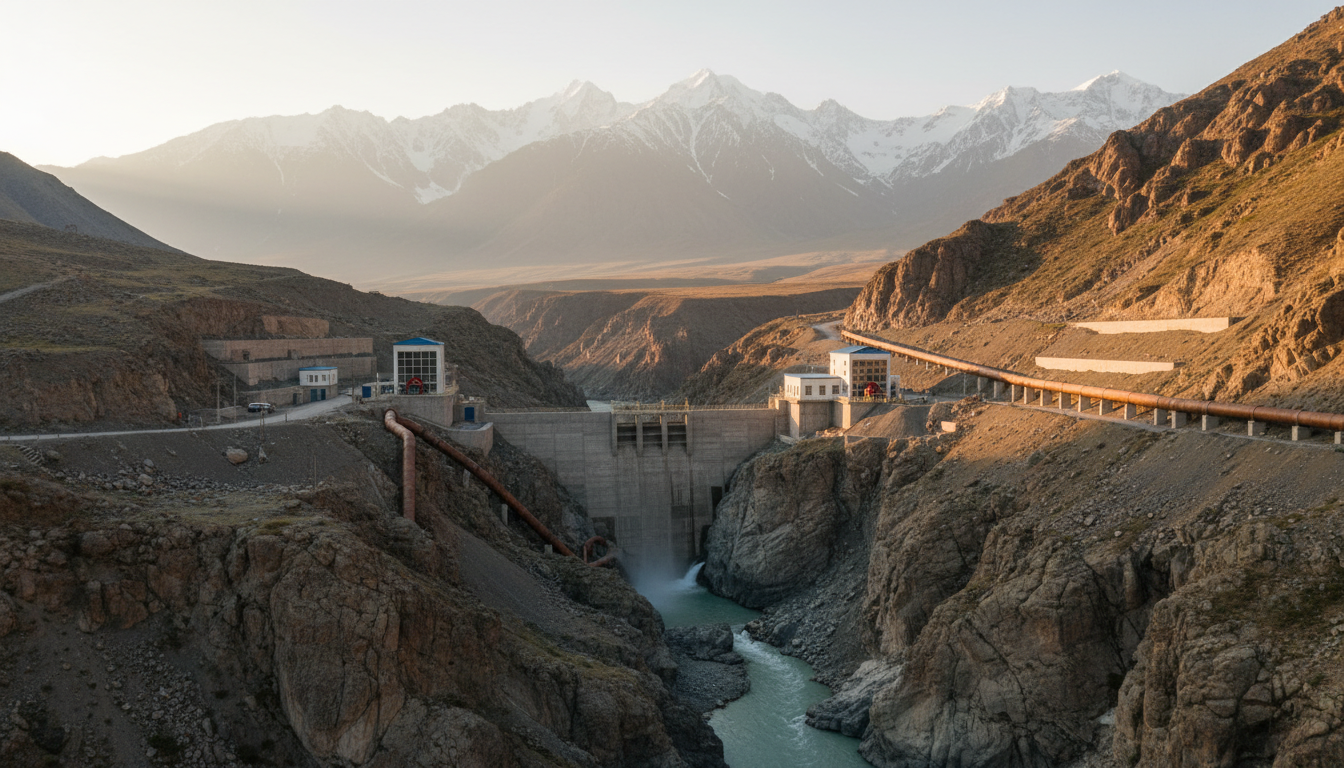
Kyrgyzstan is expanding small hydropower capacity to tackle a widening energy deficit, driven by surging demand and limited domestic generation. This strategy aims to bolster energy independence, as government officials stated.
On April 20, two new small hydroelectric power plants, Sokuluk-3 (9.5 MW) and Tuyuk (5.9 MW), commenced operations in northern Chui. These facilities are projected to generate 60-70 million kWh annually, reports the Times of Central Asia.
President Sadyr Japarov underscored the strategic importance of such projects at the launch. He noted small-scale hydropower boosts energy system resilience and helps reduce the national energy deficit.
Currently, 48 small HPPs with 180 MW combined capacity are operational across Kyrgyzstan. The government plans significant expansion, with 50 more HPPs under construction; 13 are slated for commissioning in 2026.
Kyrgyzstan’s electricity consumption reached 19.3 billion kWh in 2025, a 900 million kWh increase from the prior year. Domestic generation covered 15.4 billion kWh, leaving a 3.9 billion kWh deficit requiring imports.
This import requirement was met through electricity purchases from Turkmenistan, Uzbekistan, Kazakhstan, and Russia. Such reliance on regional partners highlights Kyrgyzstan's energy security challenges and geopolitical interdependencies.
Electricity consumption surged over 25% in the past five years, climbing from 15.4 billion kWh in 2020. Minister Bakyt Torobayev projects demand could reach 25 billion kWh by 2030 if current growth rates persist.
Rapid housing construction, new industrial facilities, and a population over 7.4 million are driving this demand surge. The Energy Ministry reported 4,192 industrial facilities and 96,975 households connected to the national grid in the last three years.
Despite overall generation capacity expansion, supply lags behind demand. This prompts authorities to prioritise small hydropower as a flexible, scalable solution for improving energy security and reducing import reliance.