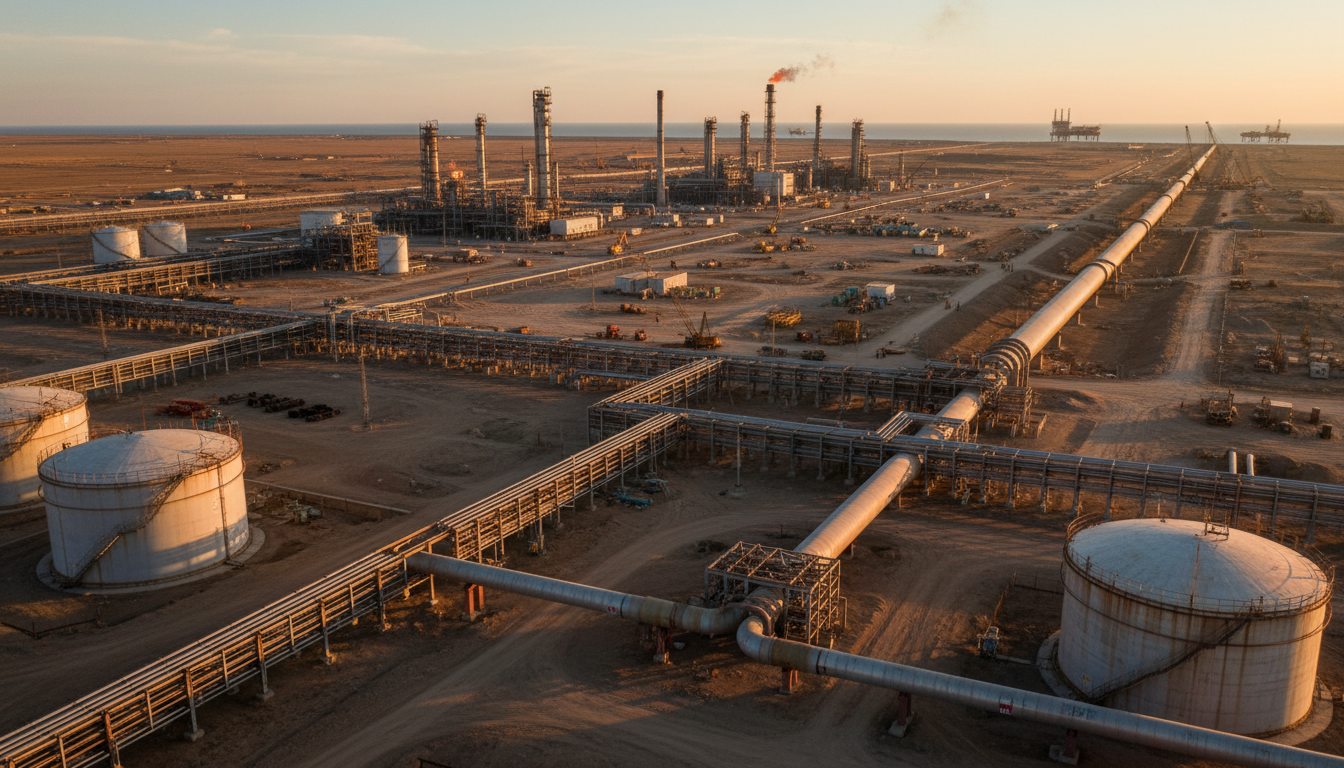
The geopolitical landscape of global energy has shifted profoundly, instigated by Iran's effective closure of the Strait of Hormuz. This development has created unparalleled market uncertainty and elevated the strategic importance of Central Asia's energy producers, particularly Kazakhstan and Turkmenistan, to unprecedented levels.
The Strait, a critical maritime choke point, previously facilitated a significant portion of the world's seaborne oil and liquefied natural gas. Its current inaccessibility severely disrupts established supply chains on a global scale, necessitating an urgent re-evaluation of alternative energy sources and transit routes for major consumers.
Kazakhstan, already a substantial oil producer, possesses considerable proven reserves capable of scaling up production. Its ability to diversify export routes beyond traditional conduits becomes paramount in this new environment, offering a crucial alternative to disrupted Middle Eastern supplies.
The Caspian Pipeline Consortium (CPC) system, terminating at Russia's Black Sea port of Novorossiysk, remains a key artery for Kazakh oil. However, the crisis underscores the imperative for further investment in alternative pathways, reducing reliance on any single transit state or route.
Turkmenistan, a gas-rich nation, holds some of the world's largest natural gas reserves, primarily exporting via pipelines to China. Its established networks offer a stable, non-Middle Eastern supply, positioning it as an increasingly vital energy partner for Asian markets.
The potential for increased Turkmen gas flows to other regions, previously deemed less commercially viable due to logistics, now warrants renewed strategic consideration. This re-assessment could include projects aimed at connecting to the South Caucasus and further west, diversifying Europe's supply base.
This external shock significantly alters the geopolitical bargaining power of these Central Asian states. They are no longer simply regional suppliers but critical components of global energy security, potentially translating into increased leverage in international relations and development financing.
However, realising this elevated strategic importance is not without significant logistical hurdles. Existing infrastructure is largely oriented towards specific markets, and developing new, viable export corridors requires substantial investment and complex international cooperation.
China, a major energy consumer, has long invested heavily in Central Asian energy infrastructure, notably the China-Central Asia Gas Pipeline system. Beijing's existing partnerships and infrastructure position it favourably to benefit from increased regional output and secure its long-term energy needs.
For European economies, struggling with energy security concerns and seeking to reduce reliance on certain suppliers, Central Asian resources offer a tantalising, albeit geographically distant, alternative. New pipeline initiatives might become more economically justifiable given the current market volatility.
The crisis underscores the global imperative for energy source and transit route diversification. Central Asia's distinct geographical position offers precisely this kind of diversification, providing options away from volatile maritime chokepoints and enhancing global energy resilience.
Attracting the necessary long-term investment for infrastructure expansion will depend heavily on perceived regional stability and predictable regulatory environments. These factors will be key determinants in whether Central Asia can fully capitalise on its current strategic advantage.
The closure of the Strait of Hormuz has irrevocably altered global energy calculus. Central Asia now stands at a critical juncture, its resource potential demanding renewed global attention and the political will to connect it to an energy-hungry world.