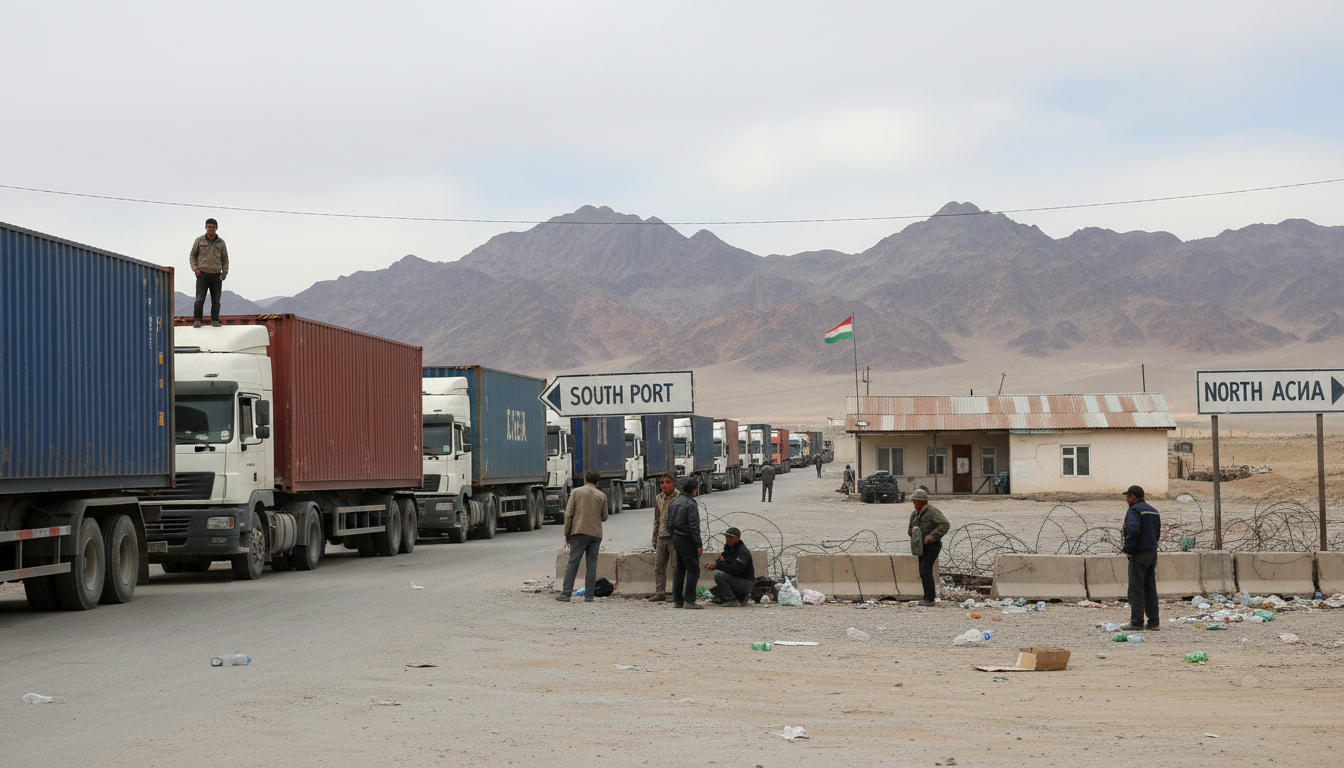
The recent escalation of hostilities between the US, Israel, and Iran, featuring both initial air strikes and retaliatory actions, has generated significant economic reverberations across the wider Middle East. However, the indirect yet profound shockwaves are arguably felt most acutely in the landlocked nations of Central Asia, whose economies are deeply intertwined with transit routes through Iran and its access to global shipping lanes.
For countries like Kazakhstan, Iran offers one of the most direct and historically established corridors for trade with global markets, particularly those to the south, west, and through the Persian Gulf. This strategic dependence means that disruptions in Iranian territory or airspace rapidly translate into tangible economic consequences for the region's commercial viability.
The immediate fallout has manifested in escalating costs for goods traversing these vital arteries. Increased insurance premiums for cargo, coupled with heightened security concerns, compel shippers and logistics providers to charge more for their services. These additional expenses are ultimately passed on to Central Asian consumers and businesses, contributing to inflationary pressures.
Beyond monetary increments, the conflict has introduced substantial delays across the supply chain, impacting diverse sectors. Decisions by shipping companies to reroute vessels or by overland transporters to seek alternative, often lengthier, paths add days or even weeks to delivery schedules, disrupting just-in-time inventories.
Kazakhstan, as a major regional economy and significant exporter of raw materials, finds its international trade particularly exposed to these transit vulnerabilities. Its ambitious efforts to connect to global markets are significantly predicated on the stability and accessibility of various transport corridors, crucially including those passing through Iran to southern ports.
This logistical quandary affects a broad spectrum of economic activities, from the import of manufactured goods and agricultural products to the export of minerals and energy resources. Local industries relying on timely delivery of components face production slowdowns, further exacerbating the economic strain and impacting employment.
Other Central Asian states, while perhaps not exhibiting the same scale of trade volume as Kazakhstan, also rely heavily on Iranian pathways for their own import-export dynamics. Turkmenistan, Uzbekistan, and Tajikistan all utilise Iranian transit corridors, making the regional impact systemic rather than isolated, affecting their respective development plans.
The current instability underscores the long-standing imperative for Central Asian nations to diversify their transport networks and reduce single-point dependencies. While initiatives like the Middle Corridor, connecting Central Asia to Europe via the Caspian Sea and the South Caucasus, have gained momentum, their full operational capacity remains a work in progress.
This renewed geopolitical pressure provides an urgent impetus for accelerated development and greater utilisation of alternative routes, even if they currently entail higher costs or longer transit times. The long-term objective is to build robust regional resilience against disruptions in any single geopolitical bottleneck or transit country.
Consequently, the direct military exchanges in the Middle East have effectively imposed a non-tariff barrier on Central Asian trade, raising the cost of doing business and reducing competitiveness. This situation fuels inflationary pressures within regional economies already grappling with their own domestic economic challenges and currency fluctuations.
Governments across the region are now confronted with the complex task of mitigating these external shocks, potentially through subsidies or intensified diplomatic engagement to secure transit. The balance between providing short-term relief and pushing forward with long-term strategic infrastructure projects becomes a critical policy challenge.
The continued stability of trade routes through Iran is not merely an economic consideration but a profound strategic one for Central Asian integration into the global economy. Any prolonged period of elevated risk or sustained disruption necessitates a fundamental re-evaluation of regional logistical paradigms and strategic partnerships.
Ultimately, the current geopolitical friction serves as a stark reminder of Central Asia's inherent connectivity to broader Eurasian security and economic trends, extending far beyond its immediate landlocked status. Its prosperity and stability remain inextricably linked to the geopolitical health of key transit states.