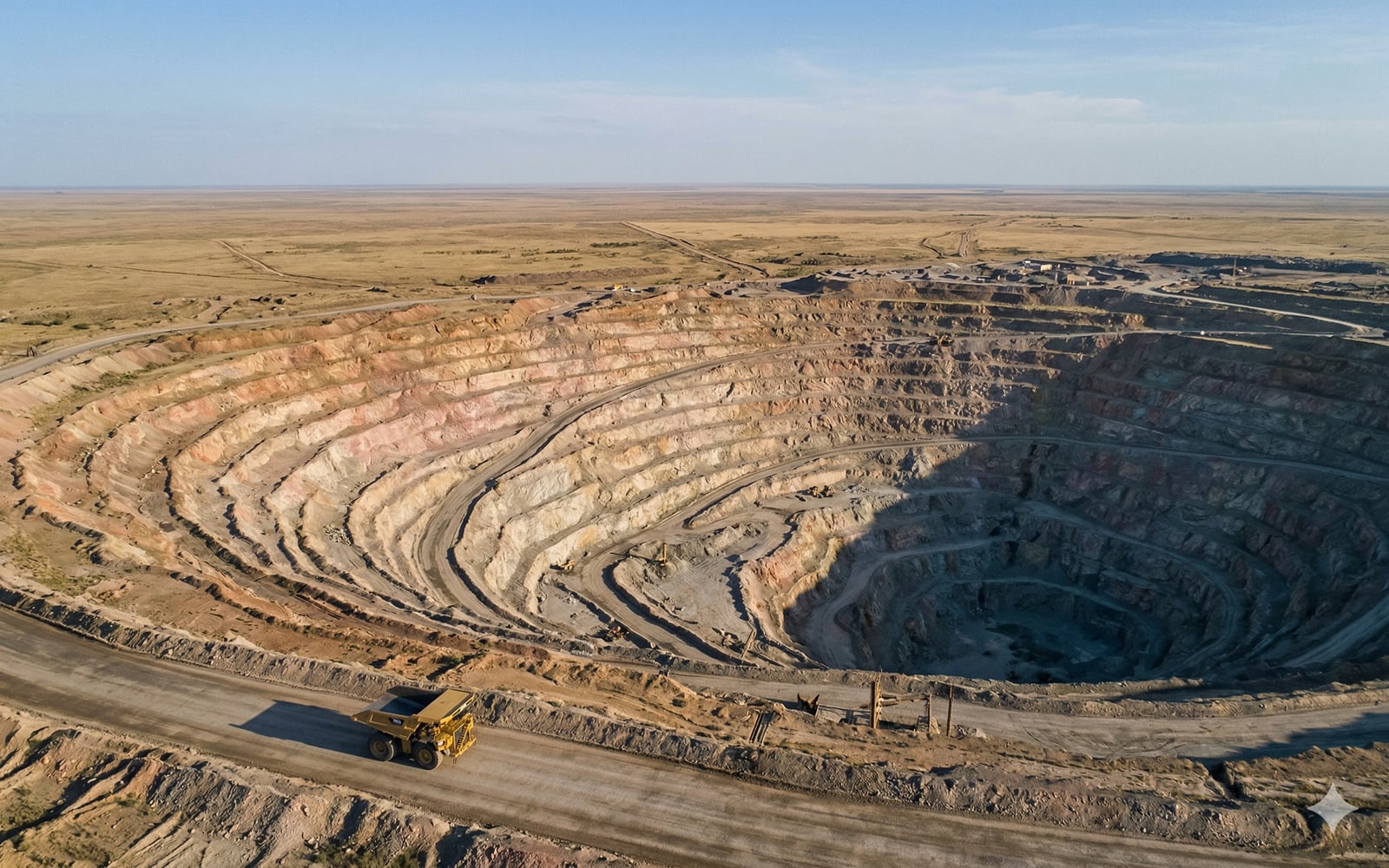
Western capitals are queuing up at Kazakhstan’s door. In the past six months alone, the European Commission has announced a strategic raw materials partnership, the US Department of Energy has cleared $3.4 billion in DFC financing for two extraction projects, and a UK trade delegation has signed pre-feasibility agreements covering eight critical mineral deposits in the country’s eastern regions.
For Astana, the timing could not be better. China remains the dominant partner — accounting for roughly 38% of mineral export volumes — but Beijing’s leverage is increasingly counterbalanced. Officials in the Ministry of Industry now openly speak of a "diversification ceiling" beyond which no single buyer should be permitted to rise.
The shift is not purely economic. Behind the rare-earths headlines lies a quiet recalibration of the country’s foreign policy posture, one that began after the January 2022 unrest and has accelerated since. Kazakhstan’s leadership, long accused of hedging too cautiously between Moscow and Beijing, now appears to have decided that the moment for hedging is over and the moment for monetizing has arrived.
Whether Western investors get the terms they want is another question. Anonymous sources within the energy ministry suggest that Astana is pushing for value-added processing requirements — a stipulation that would force buyers to build separation and refining capacity inside Kazakhstan, not in China or Europe.
If those terms hold, the country may emerge from this cycle not as a supplier of raw inputs but as a node in a regional industrial chain. That would be a structural change, not a tactical one — and it would mark the most consequential shift in Kazakhstan’s economic geography in two decades.