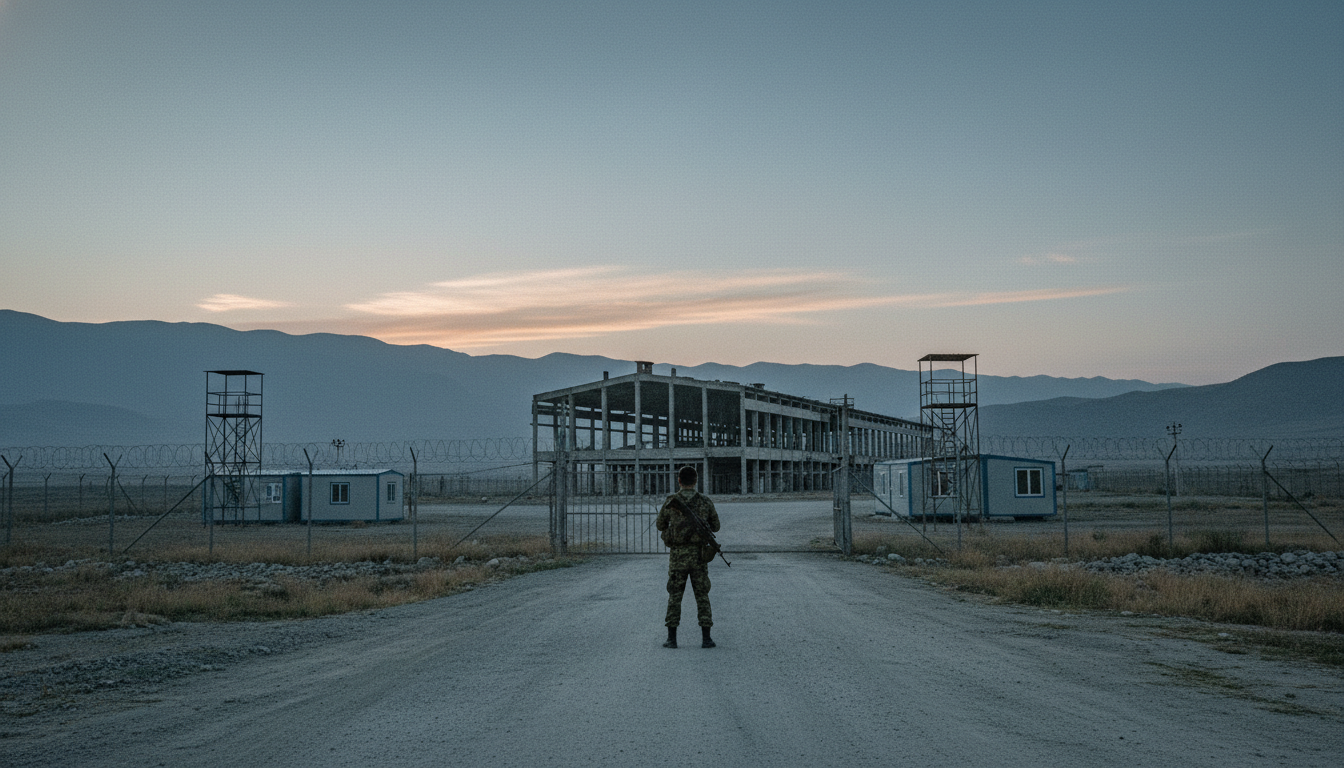
Four years have passed since Iran publicly announced the establishment of a drone factory in Dushanbe, Tajikistan, yet its operational status—indeed, its very existence—remains profoundly unclear. This persistent ambiguity raises fundamental questions about the true nature of Tehran's claims and its strategic objectives in Central Asia.
The initial revelation generated considerable international interest, positioning Iran as a significant defence industry player extending its technological reach into a strategically important region. Such a move would naturally imply an enhancement of Iran's geopolitical standing and influence within the former Soviet space.
Despite the declaration, concrete evidence of a functioning production facility in Tajikistan has never materialised. Journalists, defence analysts, and diplomatic observers have sought verifiable signs of its operations, consistently finding no tangible indications of drone manufacturing.
Experts and various government officials, both within and beyond the region, openly question if the factory ever moved past a conceptual stage. Their scepticism points to the absence of typical logistical and infrastructural footprints expected of such an advanced industrial venture.
This enduring uncertainty suggests the Dushanbe facility might have been primarily conceived as a symbolic gesture rather than a genuine industrial project. Such a declaration could serve Iran's broader aims of projecting military and technological prowess to a regional and global audience.
From Tehran's perspective, announcing a drone factory in Central Asia would underscore its growing self-sufficiency in advanced weaponry, particularly relevant given ongoing international sanctions. It effectively signals Iran's resilience and its capacity for independent defence innovation.
The choice of Tajikistan is also noteworthy, given the two countries' shared cultural and linguistic heritage. For Iran, securing a foothold in a Persian-speaking Central Asian state offers a strategic advantage where Russian and Chinese influence often predominates.
Dushanbe's quiet engagement, or apparent lack thereof, in confirming or denying the factory's existence also adds layers to the enigma. This silence could indicate a delicate balancing act by the Tajik government, navigating regional power dynamics and avoiding overt alignment.
A symbolic announcement could also subtly challenge the security interests of other regional actors, including Russia and China, who maintain significant military and economic presences in Central Asia. It introduces a new variable into the established geopolitical equation.
For Western powers, particularly the United States, any verifiable Iranian drone production facility in Central Asia would trigger serious non-proliferation concerns and potential sanctions implications. The ambiguity surrounding Dushanbe thus maintains a state of strategic caution.
The operational costs and technical complexities of establishing such a facility are immense, requiring significant investment in infrastructure, supply chains, and skilled labour. The lack of observable economic activity commensurate with this project further strengthens the doubt.
Ultimately, the purported Dushanbe drone factory appears to function more as a narrative tool than a physical reality, allowing Iran to project an image of expanded military-industrial reach without concrete commitment. Its effectiveness lies precisely in its unverified status.
This case highlights the intricate interplay of declared intentions, strategic signalling, and the reality of implementation in an often-opaque geopolitical landscape. It serves as a reminder that pronouncements from state actors require critical scrutiny, especially when concrete evidence is scarce.