Georgia’s external trade saw a notable uplift in the first quarter of 2026, with overall exports reaching $1.72 billion. This represented a 23.4 per cent increase compared with the same period a year earlier, driven by significant shifts in the country’s export composition.
While passenger cars traditionally dominated Georgia’s export portfolio, their value declined by 27 per cent year-on-year, settling at $365 million. This reduction allowed oil and petroleum products to ascend to the second-largest export category, marking a substantial reorientation of trade flows.
Exports of oil and petroleum products surged to $208 million during the first three months of 2026. This figure is nearly seven times higher than the $26 million recorded in the corresponding period of 2025, representing a remarkable 698 per cent increase in this sector.
A striking aspect of this growth is its origin in local production rather than re-exports. Petroleum products from domestic output accounted for $200 million of the total, with re-exports contributing only $8 million, underscoring the expansion of Georgia’s processing capabilities.
Georgia itself possesses limited crude oil reserves. Consequently, the raw material fuelling this export boom arrived entirely from Russia in the first quarter of 2026, valued at $118 million, indicating a strategic reliance on this specific import source.
This Russian crude is reportedly processed at the Kulevi oil refinery, which commenced operations in Georgia in 2025. The facility’s initial phase focused on refining Russian oil, directly contributing to the surge in domestic petroleum product exports.
Representatives of the refinery have stated their intention to diversify supply chains beyond Russia. Efforts are reportedly underway to include crude oil from Turkmenistan and Kazakhstan, aiming to broaden the refinery’s operational scope and reduce dependency.
The destination markets for these refined products reveal an unconventional trade pattern. Togo, a country in West Africa, emerged as Georgia’s primary export market for petroleum products in Q1 2026, receiving $55.3 million worth of goods.
Other significant export destinations included Turkey, China, Malta, Morocco, Singapore, the UAE, Libya, Cyprus, and Uzbekistan. This broad geographical spread illustrates Georgia’s growing role as an intermediary in global energy product distribution.
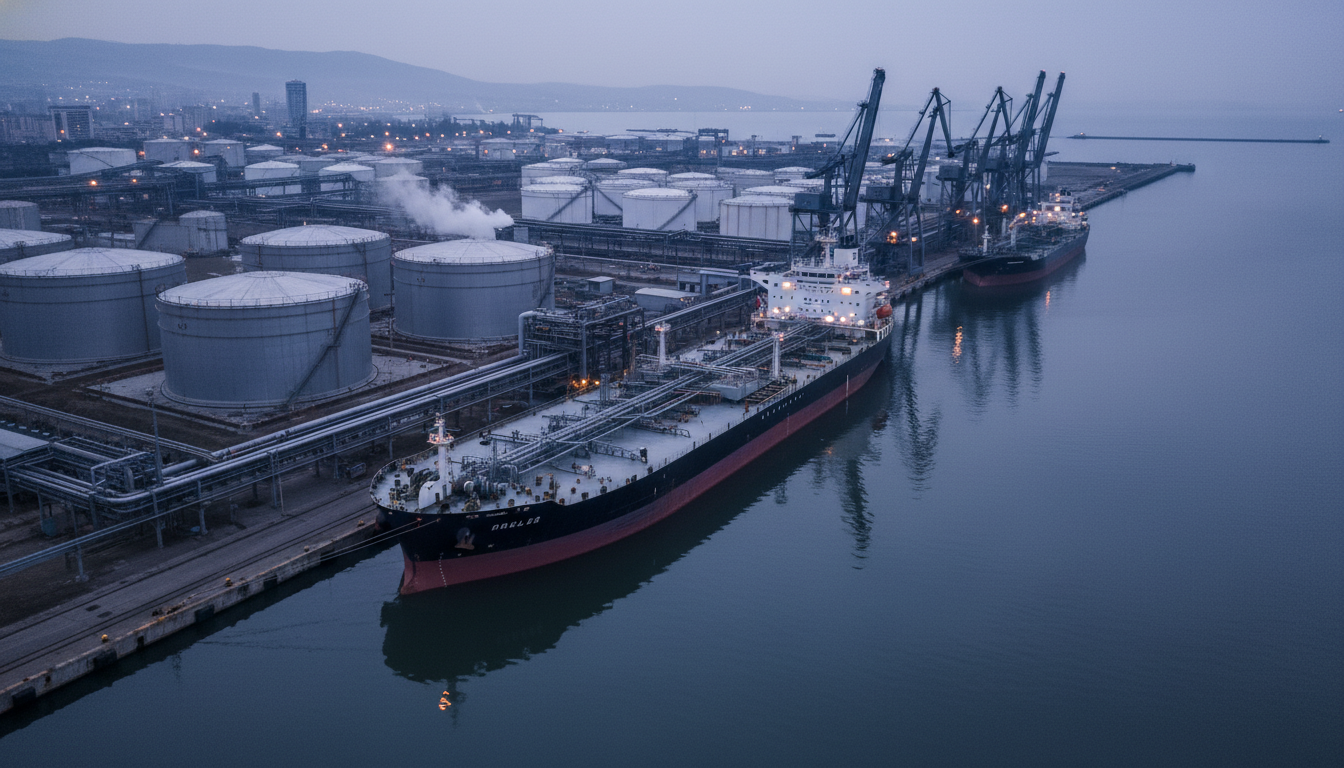
The Kulevi port, situated on Georgia’s Black Sea coast, plays a pivotal role in this trade, facilitating the transport of crude oil and petroleum products. Its function drew scrutiny from the European Union, which had considered including the terminal in its 20th sanctions package.
Brussels’ initial concerns revolved around the port’s perceived involvement in transporting Russian oil via sea, including through the so-called "shadow fleet" tankers. This raised questions about potential circumvention of existing sanctions regimes.
However, the EU ultimately decided on 10 March 2026 to remove Kulevi from its list of potential sanctions targets. This decision followed specific assurances from the Georgian authorities and SOCAR, the Azerbaijani company operating the terminal.
These commitments included pledges from Tbilisi and SOCAR to ensure full compliance with EU sanctions against Russia, notably adhering to the price cap mechanism for Russian oil and respecting EU import prohibitions. This agreement proved decisive in the EU’s reconsideration.
While the EU’s stance on Kulevi has been clarified, the broader environment remains dynamic. The UK recently sanctioned a tanker that delivered Russian oil to Kulevi, though the direct impact of this specific action on Georgian ports or previously completed operations remains uncertain.