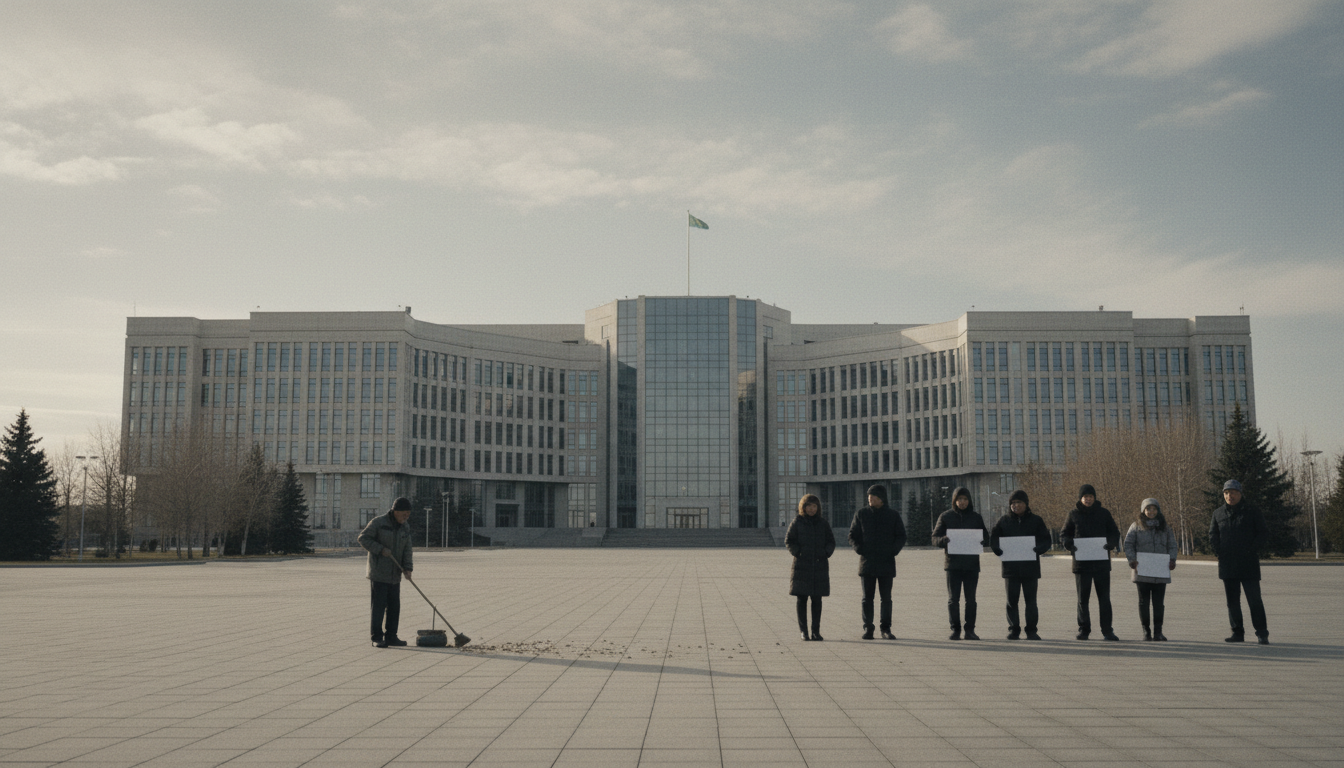
Kazakhstan recently endorsed a new Constitution in a nationwide referendum, with the government framing this as the culmination of a "transformation of the state" and the advent of a "New Kazakhstan." This formal shift, approved overwhelmingly on March 15, 2026, purports to redefine the nation's political architecture.
However, a consensus among analysts suggests a divergence from this official narrative. Far from initiating a genuinely new political era, the amendments appear to solidify an already robust "superpresidential" model, potentially limiting public scrutiny and participation in governance. This raises questions about the true trajectory of political evolution within the Central Asian state.
Constitutional Reconfiguration
The recent constitutional referendum was presented by Astana as the final stage in establishing a more responsive and modern state. Official communications highlighted the popular mandate for these changes, portraying them as a critical step towards broad national renewal. The government’s language underscored a definitive break with past political structures.
This framing, however, faces scrutiny from observers. Several analysts contend that the constitutional revisions do not represent a fundamental liberalisation of the political system. Instead, they perceive the alterations as mechanisms designed to further entrench the executive’s dominance, rather than foster a more pluralistic political environment.
Presidential Dominance Reinforced
The modifications to the foundational law have significantly consolidated presidential authority. Zauresh Battalova, from the Parliamentarianism Development Fund, argues that the constitutional changes have exacerbated an already distorted power vertical. The "superpresidential" framework, initially established in 1995, has been demonstrably reinforced by these latest reforms.
Crucially, major governmental decisions and a substantial number of key appointments now fall solely within the President’s prerogative. This concentration of power suggests that the system increasingly relies on the decisions of a single individual, diminishing collective governance. Temur Umarov of the Carnegie Russia Eurasia Center views this as a continuation of established political traditions. He asserts that President Kassym-Jomart Tokayev has effectively shed any pretenses of democratic rule. Instead, he appears intent on formally enshrining the extensive powers he has accumulated.
Legislative Constraints and New Bodies
Parliament’s legislative and representative functions have seen a noticeable reduction under the new constitutional order. The reforms, ostensibly aimed at strengthening the legislature, have instead eroded its capacity for effective scrutiny of the executive branch. This shift impacts Parliament’s ability to genuinely influence policy or hold the government accountable.
A notable development is the establishment of the People’s Council, a new consultative body. While presented as a platform for dialogue between citizens and the government, analysts like Battalova anticipate it will further impact Parliament’s functions. The Council is granted the right to propose legislation and suggest referendums, thereby encroaching upon traditional legislative prerogatives. Umarov posits that the People’s Council effectively serves as a functional replacement for the Senate, noting it will likely be staffed by former senators, thereby ensuring their continued access to influence.
Intra-Elite Dynamics and Forthcoming Elections
The new power structures introduce the potential for renewed intra-elite conflicts, reminiscent of the era under former President Nursultan Nazarbayev. Such tensions could contribute to greater political instability, challenging the coherence of the ruling establishment. The consolidation of presidential power may inadvertently heighten competition within the elite for proximity to decision-making centres.
The parliamentary elections scheduled for August 2026 are widely anticipated to yield predictable results. Political analyst Dosym Satpayev and sociologist Serik Beissembayev both suggest that the electoral outcomes are largely pre-determined, given that candidates will be selected exclusively from party lists. A marginal possibility exists for the emergence of one or two new parties, perhaps a conservative entity focusing on national identity, and a feminist-leaning party.
The Nexus of Economy and Stability
The prevailing economic situation in Kazakhstan represents a critical variable for the country’s future political stability. Should the economic outlook continue to deteriorate, existing societal tensions are likely to intensify. The government's proposed reforms, perceived as largely inconsequential, offer little to assuage public dissatisfaction.
Such economic pressures could trigger widespread public protests, particularly as civil society groups increasingly demand expanded rights and greater participation in legislative processes. The disconnect between government initiatives and public aspirations, exacerbated by economic hardship, poses a direct challenge to the current political equilibrium. The new constitutional framework offers no apparent solution to this fundamental linkage between economic performance and social stability.
Navigating the 'New Kazakhstan'
Kazakhstan's journey into the "New Kazakhstan" era, as defined by its recent constitutional overhaul, appears to solidify existing power dynamics rather than usher in a transformative liberalisation. The reinforcement of presidential authority and the curtailment of legislative oversight point to a continued centralisation of power.
The government’s response to demands for greater public participation has been met with largely symbolic gestures, leaving fundamental structural issues unaddressed. As the country approaches parliamentary elections and navigates ongoing economic challenges, the interplay between elite stability, public discontent, and the newly enshrined constitutional order will dictate Kazakhstan's trajectory. The long-term implications for governance and societal harmony remain to be fully understood.