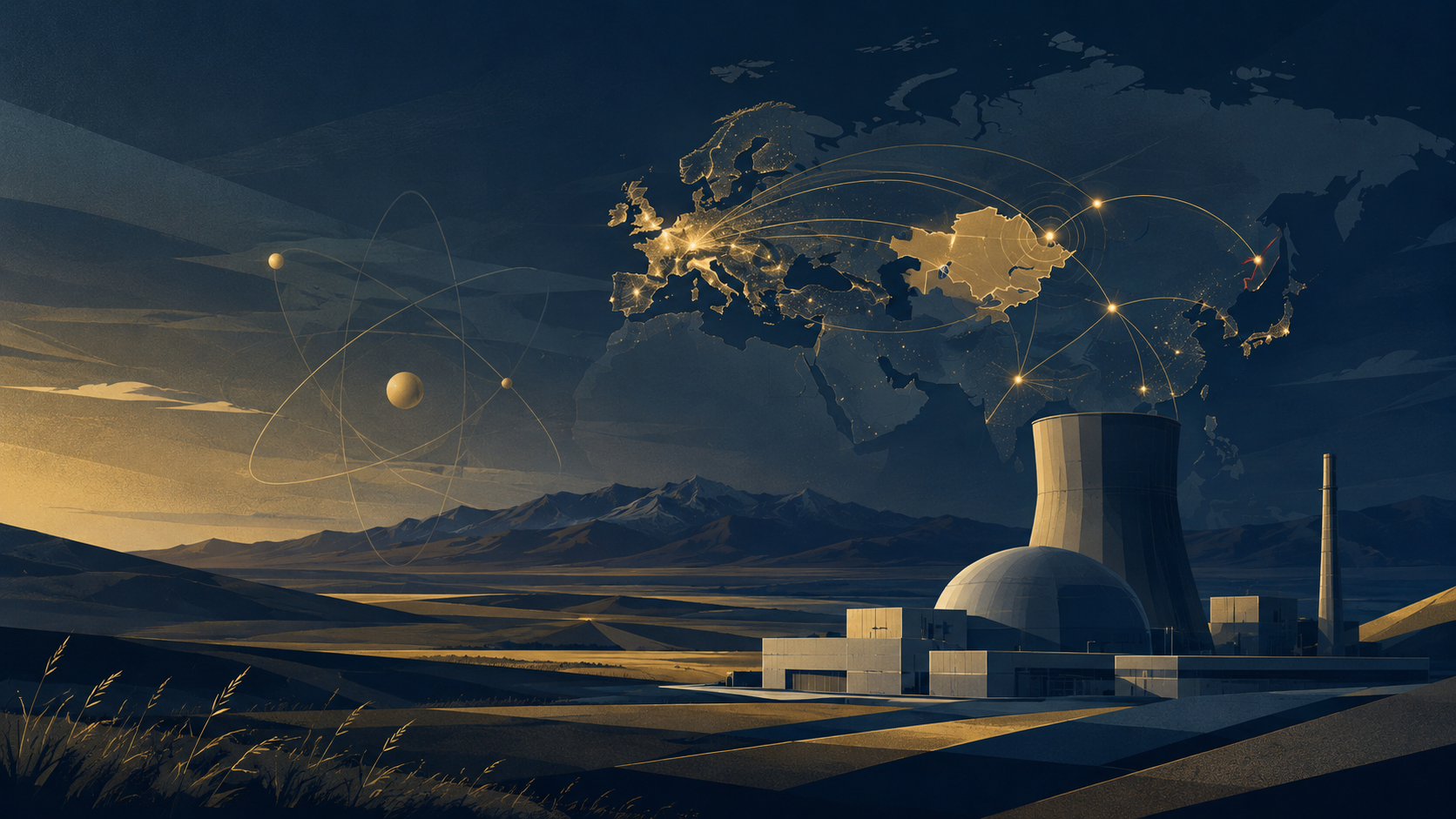
Rafael Grossi, Director General of the International Atomic Energy Agency, described Kazakhstan as a 'key partner of the IAEA in nuclear safety issues' in an interview published by Qazinform on 26 May following his visit to Almaty. The framing reflects something larger than diplomatic courtesy: Kazakhstan is now at the centre of a structural shift in how Western countries source uranium.
Kazatomprom, the state-owned uranium producer and the world's largest by output, accounted for approximately 39% of global uranium production in 2024. That share has been climbing as Western utilities — under political pressure to reduce their exposure to Rosatom, Russia's state nuclear corporation — have accelerated the diversification of their fuel supply chains. The dispute between Kazatomprom and the Rosatom subsidiary SGCC over the Budenovskoye joint venture, reported by Eurasianet on 13 May, is one visible consequence of that broader reorientation.
"Kazakhstan is a key partner of the IAEA in nuclear safety issues."
— Rafael Grossi, IAEA Director General, Qazinform, 26 May 2026
Why this visit matters now
The IAEA's engagement with Kazakhstan goes beyond inspection protocols. The agency has been deepening its technical cooperation with Almaty as Kazakhstan expands its domestic nuclear infrastructure — including the proposed construction of a small modular reactor, which remains under active discussion with multiple potential partners including China, Russia, South Korea and France.
For Western governments and energy companies watching the nuclear fuel market, the Grossi visit is a signal of institutional engagement with a supplier they are increasingly relying on. For Kazakhstan, the IAEA partnership provides international legitimacy for a nuclear sector growing in strategic importance precisely as the geopolitics of energy supply become more fraught.
The timing also coincides with EBRD's annual meeting in Riga this week, where Central Asian energy projects — including Kazakhstan's port expansion at Aktau — are on the agenda. The confluence of multilateral attention on Kazakh energy infrastructure reflects a broader pattern: institutions that once viewed the country primarily as an oil exporter are now engaging with it as a critical node in the global energy transition.