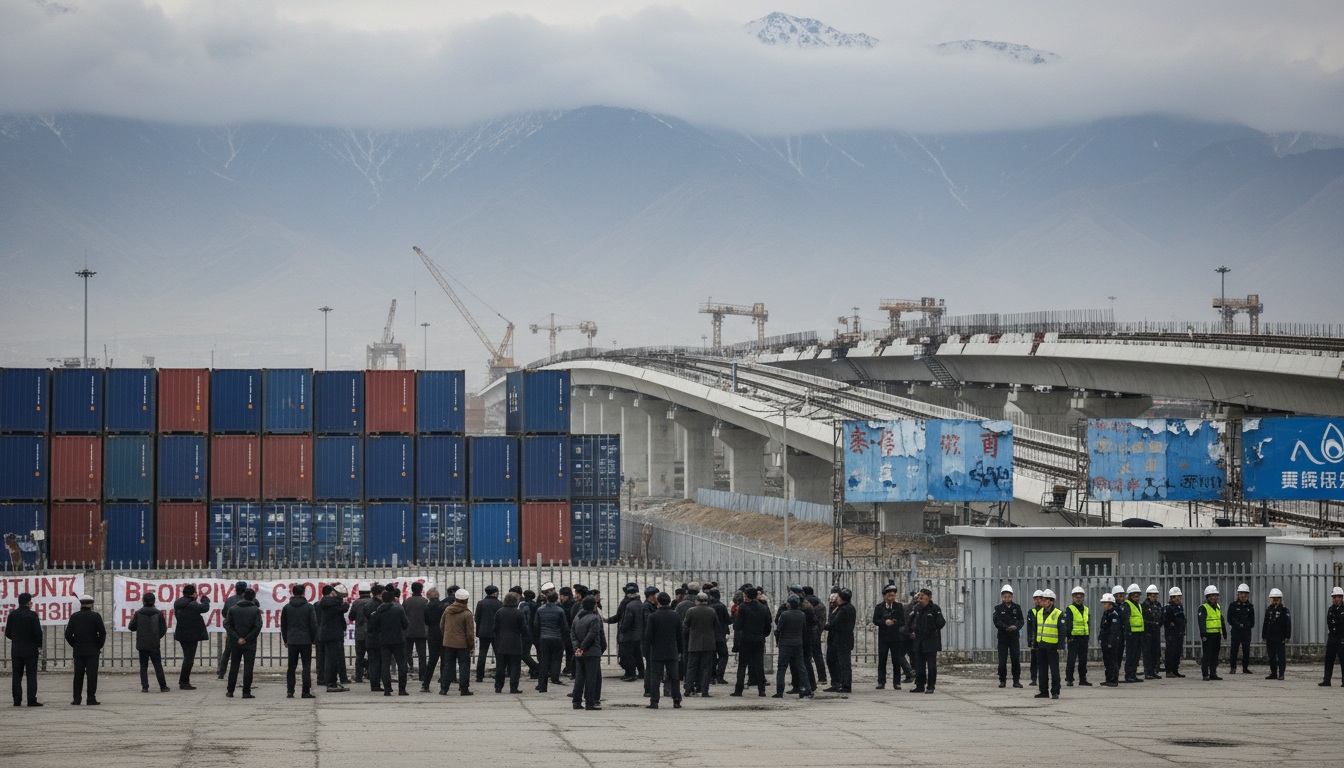
Kyrgyzstan presents a distinct paradox within Central Asia, experiencing the region’s most pronounced public backlash against China's growing influence. This resistance unfolds even as Beijing solidifies its position as Bishkek’s primary economic partner. The dynamic illustrates the complex interplay between economic imperative and localised resentment in a geopolitically sensitive borderland.
This public discontent has manifested through various channels, ranging from organised anti-Chinese protests to violent confrontations involving local residents and Chinese workers. Nationalist groups have also conducted raids targeting individuals perceived as "illegal" Chinese migrants, alongside the notable cancellation of a substantial investment project worth hundreds of millions of dollars.
Despite these visible tensions, China’s economic footprint in Kyrgyzstan has expanded significantly. It now stands as Kyrgyzstan’s main creditor, its largest investor, and its biggest trading partner. In 2023, the bilateral relationship was formally elevated to a comprehensive strategic partnership, underscoring the depth of these ties.
The scope of this cooperation is extensive, encompassing critical sectors such as mining, agriculture, energy, transport, and construction, alongside broader trade relations. It is difficult to overstate China’s systemic importance to the Kyrgyz economy, acting as a crucial driver of development and connectivity.
Beijing, for its part, consistently frames these expanding trade ties as a revival of historical friendship between the two peoples. Chinese state media frequently emphasises strengthening "exchanges and mutual learning between civilisations" to "improve the well-being" and "consolidate the traditional friendship" of both nations.
This official narrative is often linked to the Belt and Road Initiative, presented as a "path of cooperation, friendship, and prosperity" leading to a shared future. China depicts the initiative as cementing the relationship between "good neighbours, good partners, good friends, and good brothers," fostering regional stability and growth.
However, beneath this diplomatic language, various factors fuel the persistent public backlash, as noted by observers like Bradley Jardine. These underlying issues are diverse and often intersect, reflecting deep-seated anxieties within Kyrgyz society regarding Chinese engagement.
Prominent among these concerns are allegations of corruption associated with Chinese-backed projects and tangible instances of environmental degradation caused by Chinese companies. These issues frequently ignite local opposition, particularly in rural areas impacted by industrial activities.
Another significant driver of resentment centres on the perceived poor treatment and limited rights of Kyrgyz workers employed at Chinese firms operating within the country. Labour practices and wage disparities often become flashpoints, highlighting a sense of economic exploitation.
Crucially, given their shared extensive border, concerns over "creeping migration" and potential Chinese control of land remain particularly salient. These fears tap into deeper nationalistic sentiments and anxieties about sovereignty and demographic shifts.
While official figures indicate approximately 9,000 Chinese workers in Kyrgyzstan, widespread rumours vastly inflate this number to nearly 100,000. These discrepancies fuel elaborate conspiracy theories, including unsubstantiated claims of Chinese government-orchestrated plans for demographic colonisation through intermarriage.
These anxieties are further exacerbated by the influence of certain Chinese nationalist historians. Their claims that parts of present-day Kyrgyzstan were ceded to Tsarist Russia through "unequal treaties" in the 19th century frequently go viral in Central Asia, triggering diplomatic and public relations crises.
Such historical revisionism demands careful damage control from both Beijing and regional governments, underscoring the fragility of public trust. The confluence of economic dependence, perceived injustices, and historical grievances continues to complicate China’s strategic ambitions across its western frontier.