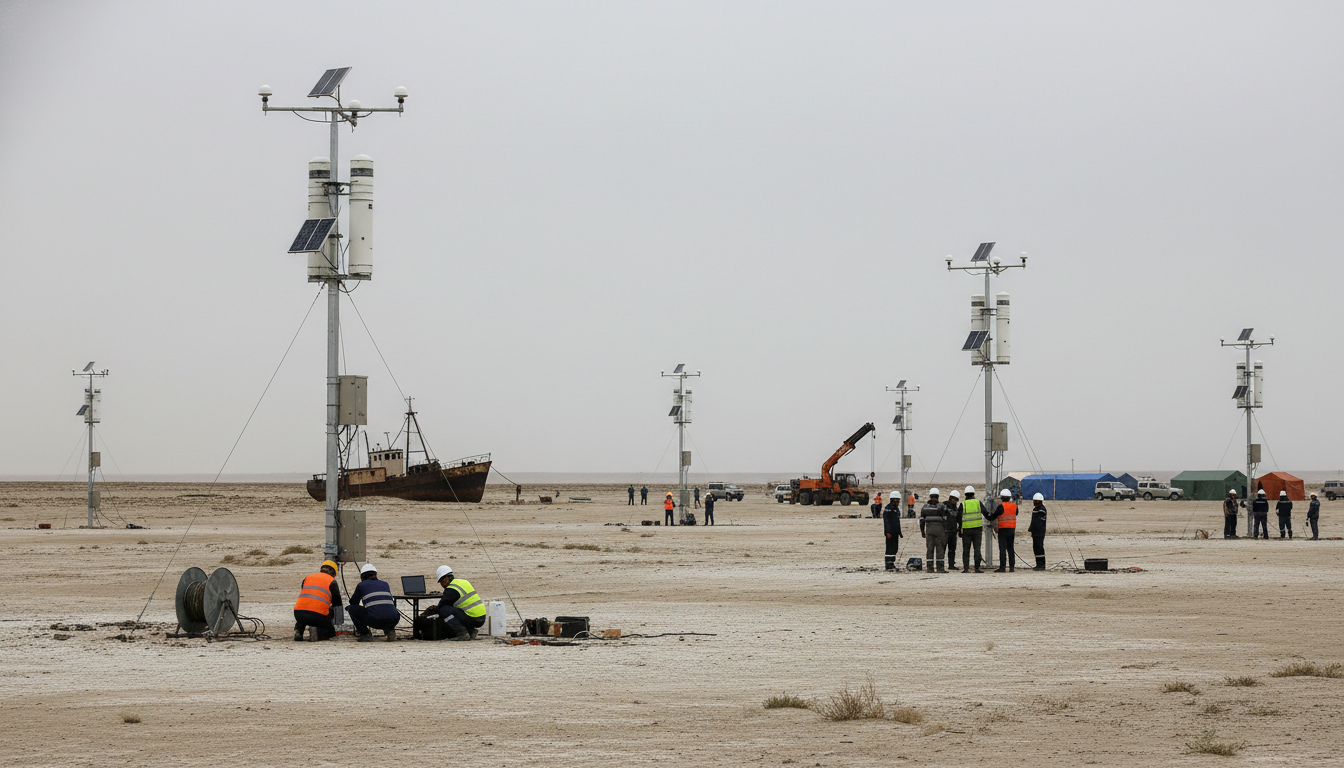
Authorities in Uzbekistan's Karakalpakstan region have completed the installation of 37 automated air quality monitoring stations, a significant step in addressing environmental degradation within the Aral Sea basin. This initiative, undertaken in cooperation with the United Nations Development Programme (UNDP), marks a concerted effort to track pollution levels and improve data-driven environmental governance in a particularly vulnerable area.
The project signals a heightened commitment from Uzbekistan to confront the long-term ecological and public health challenges associated with the Aral Sea disaster. Such systemic monitoring is foundational for developing effective mitigation strategies and informing regional policy responses to transboundary environmental issues.
Environmental Monitoring Capabilities
The newly installed system in Karakalpakstan is designed to measure a comprehensive range of atmospheric pollutants. These include fine particulate matter such as PM2.5 and PM10, alongside hazardous gases like carbon monoxide, nitrogen dioxide, ozone, and hydrogen sulphide. The stations also record crucial meteorological indicators, encompassing temperature, humidity, air pressure, and wind speed, providing a holistic environmental picture.
Data from these stations is transmitted in real time through the Aurisgreentech system, enhancing the reliability and efficiency of monitoring operations. Officials have highlighted that this technological integration significantly reduces the potential for human error and improves data accuracy, which is paramount for credible environmental assessments. The systematic collection of precise data is indispensable for understanding pollution dynamics and forecasting ecological risks across the region.
International Cooperation and Capacity Building
The implementation of this advanced monitoring network underscores the sustained engagement of international partners in supporting Uzbekistan’s environmental agenda. The United Nations Development Programme played a pivotal role in the project’s execution, providing technical expertise and institutional backing.
Akiko Fujii, the UNDP's representative in Uzbekistan, recently visited Karakalpakstan to review the progress of these initiatives. Her inspection included the regional ecology committee’s Situation Center, where monitoring results are processed, and a laboratory equipped for the analysis of air, water, and soil samples according to international standards. This oversight highlights the commitment to ensuring robust scientific protocols are maintained.
Fujii affirmed the United Nations’ ongoing support for projects aimed at enhancing the environmental situation in Karakalpakstan, reiterating the critical role of reliable data. Such capacity building is vital for equipping local authorities with the tools to assess pollution comprehensively and develop informed responses to ecological threats.
Regional Dimensions of Environmental Governance
This development in Karakalpakstan aligns with a broader regional momentum towards enhanced environmental cooperation across Central Asia and the Caspian region. The shared ecological challenges, particularly those stemming from the Aral Sea’s desiccation, necessitate coordinated, cross-border approaches.
Astana is scheduled to host a regional ecological summit from April 22 to 24, bringing together UN agencies, international organizations, and government representatives from the riparian states. This high-level gathering will serve as a platform for strategic discussions on pressing environmental concerns.
A ministerial session led by the World Health Organization is planned, focusing specifically on the health impacts of environmental degradation in the Aral Sea area. Discussions are expected to address the intricate links between pollution, public health, and the imperative for unified responses from participating nations to mitigate these adverse effects.
The Broader Ecological Imperative
The environmental catastrophe of the Aral Sea remains a stark reminder of the long-term consequences of unsustainable resource management. The dust and salt storms emanating from the dried seabed continue to pose significant challenges to public health, agriculture, and regional ecosystems.
Uzbekistan’s investment in sophisticated monitoring infrastructure reflects a recognition that robust environmental data is a prerequisite for effective rehabilitation efforts. Addressing such deeply entrenched ecological problems requires not only sustained domestic investment but also consistent international solidarity and scientific collaboration.
Outlook and Policy Implications
The installation of these monitoring stations represents a foundational step towards a more evidence-based approach to environmental policy in Karakalpakstan. The availability of real-time, accurate data will empower local and national authorities to make informed decisions regarding pollution control, resource allocation, and public health interventions.
Continued international support, particularly from entities like the UNDP, will be crucial for the long-term sustainability and expansion of these initiatives. The regional ecological summit in Astana provides an opportune moment to translate individual country efforts into a cohesive, integrated strategy for environmental resilience and public health security across Central Asia.
- News
Mirziyoyev Launches Central Asia's Largest Airport Project
29 May - News
Uzbekistan and Afghanistan Open New Rail Terminal at Hairatan
26 May - News
Uzbekistan's Reform Track Attracts South Korean and Turkish Manufacturing Interest
13 May - Economy
Delays And Rising Costs: Central Asia Feels Fallout From Iran War
8 May